

Finding the best wholesale hair extensions supplier in the US is a purchasing decision, not a contest with one permanent winner. A salon that needs a few shade-matched packs before next week's appointments may value a domestic professional account. A brand launching its own packaging may need a manufacturer that can work from an approved sample and repeatable specification. A distributor may need both.
This guide compares those buying routes, identifies publicly verifiable US-market options, and gives you a practical way to assess hair, construction, service and total landed cost. “US supplier” can mean a company selling to US buyers, an order shipped from US stock, or hair manufactured in the US. Ask which meaning applies. Winning Hair Extensions is a Qingdao, China-based manufacturer serving overseas professional buyers; it is included here as a factory-direct option, not presented as a US manufacturer. Supplier programs and availability can change, so confirm current terms directly before ordering.
What does “best supplier in the US” mean for your business?
Start with the job the supplier must perform. For an independent stylist, “best” may mean reliable access to a color ring, professional education and a fast replacement pack. For a multi-location salon, it may mean consistent codes across branches and a clear return process. For a private-label brand, the key may be control over the method, shade assortment, pack contents, labeling and repeat orders.
The distinction between a US professional distributor and a manufacturer supplying the US matters. A distributor may hold stock domestically and offer an online pro account. A factory may offer more scope to specify construction and packaging, but the buyer must plan sampling, production, import and replenishment. Neither route guarantees better hair. Ask where the particular SKU is produced, where inventory is held, and what happens when a shade is out of stock.
Shortlist examples worth checking, without a universal ranking
The following are examples of different purchasing programs visible on the suppliers' own websites as reviewed on 13 October 2026. They are not a performance ranking or an endorsement. No comparable independent batch testing was available to support a “number one” claim.
| Buying route | Publicly verifiable example | What to verify before ordering |
|---|---|---|
| US-facing professional brand | BELLAMI Professional describes license verification, pro pricing, and weft, tape-in, K-tip and I-tip methods. | Access requirements, the exact pack specification, stocked shades, shipping origin and return terms. |
| Stylist program | Donna Bella Hair describes verified professional access for licensed stylists and education resources. | Whether your intended purchase uses the current pro account, a separate stylist program, or another commercial arrangement. |
| Professional and wholesale program | Perfect Locks presents tape-ins, wefts, fusion and other methods, with wholesale access for salons. | Your account terms, available texture and color combinations, pack weights, and replenishment process. |
| Factory-direct development | Winning Hair Extensions offers a Qingdao factory contact and a product range for professional buyers. | Sample and bulk specifications, minimums by color and length, production timing, freight terms and import responsibility. |
These programs are not interchangeable. Some professional accounts are designed for licensed stylists buying finished products; a factory discussion is more relevant when a brand needs a defined construction and private-label presentation. Request written terms for your own business type rather than comparing a public retail price with an unconfirmed factory quote.
Choose the right buying model before comparing prices
The first useful comparison is not “US versus overseas.” It is stocked professional purchasing versus product development and replenishment. The same buyer may use both: domestic stock for urgent salon appointments and a planned manufacturer order for a core private-label line.
| Decision point | US-stock professional account | Factory-direct order |
|---|---|---|
| Typical fit | Salons testing methods, replacing a shade quickly, or buying established packs. | Brands and distributors defining their own assortment, packaging and repeat-order specifications. |
| Product choice | Usually limited to the published range and account availability. | Options can be discussed against an approved sample and feasible production scope. |
| Timing | Confirm live stock and dispatch cutoff; do not assume every variation is ready to ship. | Allow for sampling, approvals, production, inspection, freight and customs. |
| Cost comparison | Consider professional price, tax, domestic freight, returns and training. | Compare product, samples, packaging, inspection, freight, duty, brokerage and inventory carrying cost. |
| Main operational risk | A preferred color or method may be unavailable when the salon needs it. | A vague specification can become a costly or inconsistent production order. |
Ask each candidate for a quote against the same product brief. “20-inch blonde weft” leaves too many variables open. Provide the construction, measured length, target hair weight, shade reference, texture, finish, pack format, expected volume and delivery destination. State whether your priority is immediate installation stock or a repeatable branded SKU. A supplier that clarifies an ambiguous requirement may be more useful than one that answers every question with an unqualified yes.
Compare hair and construction on the same specification
Terms such as “Remy,” “virgin,” “double drawn” and “premium” appear frequently in wholesale listings. Treat them as starting points for questions, not measurable substitutes for a sample. Ask how the seller defines each term for the exact product quoted. Then compare the physical hair under the same lighting and handling conditions.
Hair and shade checks
Record the declared hair material, texture, color code, root or highlight placement, measured length and weight. Weigh a complete pack and clarify whether the quoted weight includes attachments. Look at the top, mid-length and ends; compare pieces within one pack as well as separate packs. Where the buyer's workflow allows it, have a trained stylist wash and dry a sample using documented care products, then record appearance and handling. A single favorable photo does not establish how every batch will behave.
Shade names and numbers are not universal. Keep a physical reference or agreed color-ring code for a reorder. Inspect color under consistent neutral light and against the natural hair types common in your client base. For a multi-shade order, specify the exact quantity by shade and length so a beautiful sample does not conceal a difficult assortment.
Attachment checks by method
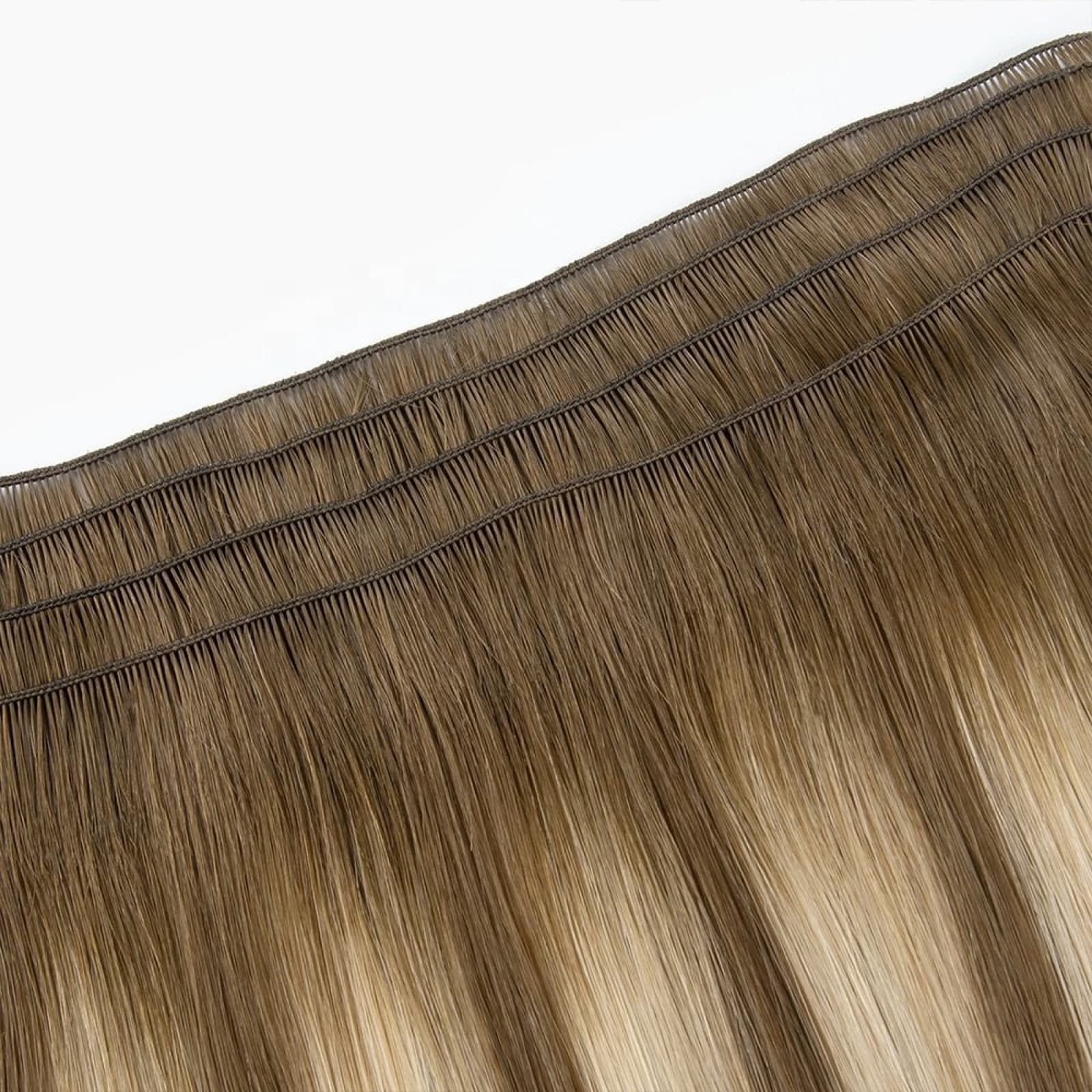
For hand-tied wefts, examine the seam, section widths, end finishing and the handling permitted by the supplier. Do not assume a hand-tied edge can be cut in the same way as a machine-sewn edge. Compare a Genius Weft or flat weft if seam profile and installation flexibility are central to your service menu.
For regular tape-ins, check tab dimensions, hair distribution near the attachment, piece count and adhesive-handling instructions. Compare an invisible tape-in when the visible root area matters for the intended placement. Aesthetic appearance alone does not prove adhesion or suitability for every client; follow the product's professional preparation, fitting and removal guidance.
For I-tips and other individual strands, agree strand weight, tip size, bond shape and compatibility with the intended fitting system. For clip-in sets, verify piece widths, clip count, base feel and the total set weight. Method choice should follow the trained stylist's assessment of the client's hair, planned placement and maintenance commitment.
Make sampling and inspection part of the supplier comparison
An effective sample test starts before a stylist opens the pack. Give each sample an identifier and record the supplier, date, method, shade, length, stated weight and packing format. Photograph the attachment and full length in consistent light. Note anything that differs from the written brief before fitting it.
On receipt, count pieces, check labeling and visible transit damage, and measure the attributes the quote specified. During preparation, record how the pieces separate, whether the attachment construction is consistent and whether the color mix supports the planned installation. In a controlled application, ask a trained stylist to note placement, sectioning, blend and client comfort. If the image or feedback comes from a model rather than your own product trial, label it accordingly; it is not test evidence for the quoted SKU.
For factory orders, ask how inspection or factory testing is performed for the specific method. A useful discussion covers material or color reference checks, construction checks, final pack counts and a pre-shipment review of the finished assortment. Request the proposed inspection criteria before bulk production: shade reference, length measurement method, weight tolerance, seam or tab appearance, label version and carton identification. If you commission a third-party inspection, agree the sampling plan and corrective-action process in writing.
Shipment inspection is a separate question from product quality. Verify carton count, shade and length breakdown, pack list, outer labels and visible packaging condition against the purchase order. Ask how exceptions are photographed and reported. A pre-shipment photo set can support a discussion, but it cannot by itself prove that every item in every carton is correct.
Calculate the full cost to serve a US customer
A quote is useful only when its scope is clear. Compare cost per usable, specified pack, not a number detached from weight and contents. A smaller pack, different attachment or narrower shade range can make a low unit price misleading. Ask whether price includes custom color work, packaging, color rings, artwork setup, inspection or replacement stock.
For a US-stock program, calculate the professional purchase price, tax where applicable, domestic shipping, backorder risk and the cost of unused shades. For a factory-direct order, include sample development, approved packaging, freight, insurance where appropriate, import duties and fees, customs brokerage and the cost of carrying inventory. The exact duty treatment and paperwork depend on the product and shipment; confirm them with your broker rather than relying on a generic percentage in a blog article.
The quote should state the currency, validity period, minimum quantity by SKU, production or dispatch basis, delivery term, payment milestones and who handles import clearance. Ask when the lead time starts: after payment, after sample approval, after final artwork, or after all three. A practical replenishment plan separates launch stock, safety stock and reorder point. Salons with time-sensitive appointments may keep a domestic fallback even while developing a private-label line.
Returns and problem resolution also affect cost. Ask what evidence a supplier needs for a shade mismatch, missing piece or construction concern; whether opened packs can be reviewed; and how replacement or credit decisions are made. Keep the sample identifier and order number with each report. That record helps both parties distinguish a manufacturing issue from a color-selection, installation or aftercare issue.
Match the supplier to the product application
Salon service menu. A stylist introducing extensions may start with a small number of methods and shades, a color-matching tool and professional instruction. A US professional account can simplify small replenishment orders. Compare the regular and invisible tape-in guide before treating either tab style as a default for every placement.
Multi-chair salon or distributor. Consistent SKU codes, shade availability, pack contents and replacement procedures matter more as the number of users grows. Build a shared sample library and an approval sheet so one stylist's favorable impression does not become an undocumented buying standard. Review weft construction choices against the installation techniques your team actually uses.
Private-label brand. Plan a smaller, coherent opening range instead of ordering every method and shade at once. Approve both the hair product and the retail presentation. A packaging mockup should show the product code, shade, length, contents and artwork revision. Review private-label options and ask who signs off a production change before shipment.
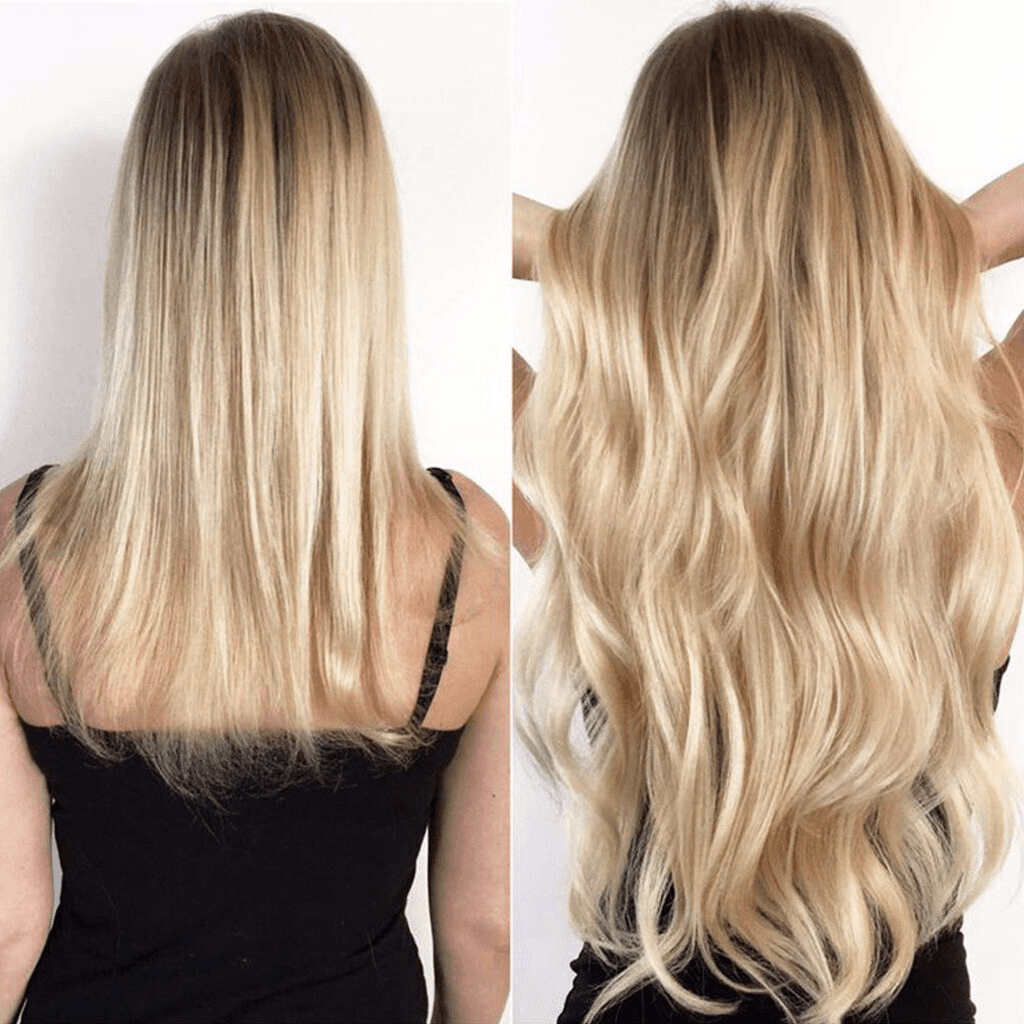
The supplied application photograph on this page illustrates why the final look depends on shade matching, placement, density and styling. It is not identified here as a verified result from any supplier or product on the shortlist. A buyer should test the actual SKU with their own trained team before using a visual example as a merchandising claim.
Use a scorecard and a staged first order
A short scorecard keeps the choice tied to your business. Score each supplier only after reviewing the same written brief and comparable samples. Suggested criteria are product fit, sample consistency, method-specific construction, shade accuracy, account or production terms, total delivered cost, replenishment plan and issue resolution. Add a separate “evidence received” column. An unanswered question should remain open rather than receive an optimistic score.
- Week 1: define the brief. Select the intended buyer, method, texture, length, shade references, pack contents, first-order range and delivery destination. Record any non-negotiable attachment details.
- Week 2: request written answers and samples. Ask every shortlisted supplier the same questions. Confirm whether the sample represents stocked production, a development prototype or a different specification.
- Week 3: inspect and trial. Use a controlled reception checklist and a trained stylist's application notes. Photograph acceptable details and specific concerns.
- Week 4: approve the purchase order. Freeze the specification revision, sample reference, artwork version, price scope, inspection points and shipment documents. Keep the first order proportionate to what you have actually validated.
For repeat orders, compare new stock with the retained reference and record deviations by SKU and batch or order number. Supplier quality is demonstrated over time by consistent outcomes and clear corrective action, not by an unverified promise of “zero defects.” Our manufacturer evaluation guide provides a deeper checklist for this stage.

FAQ: buying wholesale hair extensions for the US
Are the best wholesale hair extension suppliers necessarily US manufacturers?
No. A supplier may sell to US businesses or ship from US inventory while the hair is produced elsewhere. Ask separately for the seller's business location, the origin of the specific product and the dispatch location. Winning Hair Extensions is based in Qingdao, China, and should be assessed as a factory-direct international option.
Which supplier route is better for a new salon?
If you need small, frequent purchases and access to established methods, a verified professional account may be easier to start with. If you already know your specification and want a branded or custom range, a manufacturer conversation may be appropriate. Compare samples and written terms before committing either way.
What should I request before a bulk order?
Request a sample tied to a written specification, a quote that identifies pack contents and price scope, current minimums, a realistic timing basis, agreed inspection criteria, and an explanation of returns or corrective action. For private label, approve final artwork and labeling as well as the product.
How do I test hair extensions without making unreliable claims?
Compare like with like: the same method, shade family, length and target weight. Record the test conditions, trained installer feedback and care routine. A visual application example or a supplier's marketing photo cannot establish performance for a separate batch.
Can one supplier cover urgent salon orders and private-label production?
Sometimes, but confirm the two workflows separately. Stock availability, development samples, minimums and lead times often differ. Many buyers plan a domestic replenishment option alongside a scheduled manufacturer order.
Conclusion: buy against a repeatable brief
The best wholesale supplier is the one whose product, service model and written terms fit your actual application. A US professional brand can be a good route for stocked salon purchasing. A factory-direct partner can be worth evaluating when you need approved construction, assortment and packaging for a repeatable line. Neither choice should rest on a “best” label, one photograph or the lowest quoted unit price.
Review the Winning Hair Extensions product range before sending a brief. Include the method, length, texture, shade references, target weight or piece count, estimated quantity, packaging needs and US delivery destination. A precise brief makes the next sample and quotation conversation more useful.